
Understanding SMT PCB Assembly, SMT FPC Assembly, and SMT HDI Assembly
Rossannie Rolling
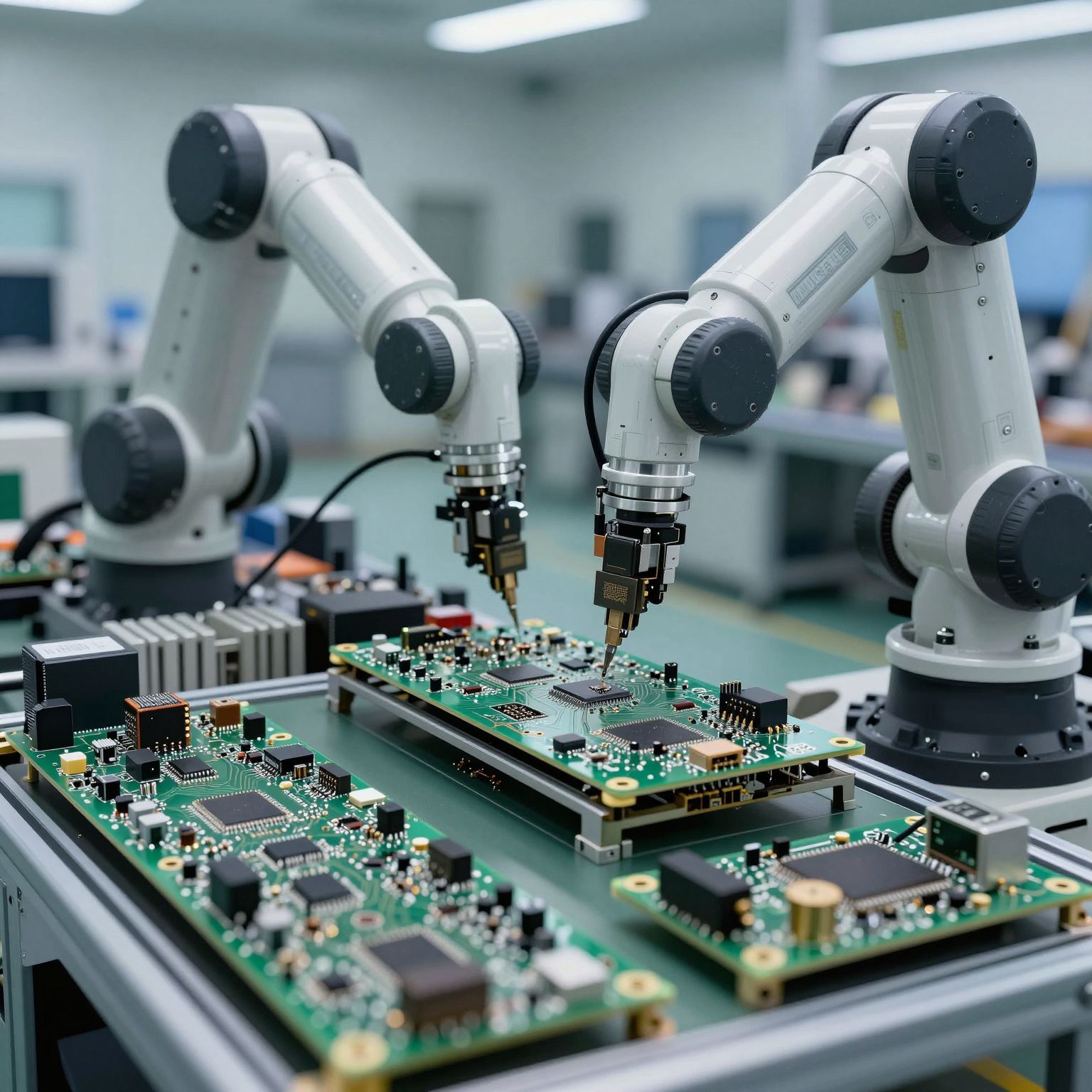
In today’s fast-evolving electronics industry, printed circuit boards (PCBs) serve as the backbone of virtually every electronic device. As technology demands smaller, faster, and more reliable devices, traditional PCB assembly methods have evolved into advanced processes such as SMT PCB Assembly, SMT FPC Assembly, and SMT HDI Assembly. These specialized techniques enable manufacturers to meet the rigorous requirements of modern consumer electronics, medical devices, automotive systems, and telecommunications equipment.
This article explores each of these three critical surface mount technologies, highlighting their unique characteristics, advantages, and ideal use cases.
What is SMT PCB Assembly?
Definition and Process Overview
SMT PCB Assembly, or Surface Mount Technology Printed Circuit Board Assembly, refers to the method of mounting electronic components directly onto the surface of a rigid PCB. Unlike through-hole technology, where component leads are inserted into drilled holes, SMT places components—known as surface mount devices (SMDs)—onto solder paste-printed pads and then reflowed using heat.
The typical steps in an SMT PCB Assembly line include:
- Solder paste application via stencil printing
- Component placement using high-speed pick-and-place machines
- Reflow soldering in a controlled thermal profile
- Automated optical inspection (AOI)
- Final testing and quality assurance
This process allows for higher component density, improved electrical performance, and automated mass production—making it the dominant method in modern electronics manufacturing. To maintain high quality, manufacturers adhere to industry standards such as IPC-A-610.
Advantages of SMT PCB Assembly
- Higher component density: Components can be placed on both sides of the board.
- Smaller footprint: Ideal for compact designs.
- Better performance at high frequencies: Reduced lead inductance improves signal integrity.
- Cost-effective for large volumes: Automation reduces labor costs.
- Improved reliability: Fewer mechanical connections prone to failure.
Due to these benefits, SMT has largely replaced through-hole assembly in most industries. For a deeper comparison, read our detailed guide on SMT vs through-hole assembly.
Common Applications
SMT PCB Assembly is widely used in:
- Consumer electronics (smartphones, laptops, tablets)
- Industrial control systems
- Power supplies and converters
- Telecommunications infrastructure
- Automotive electronics (ECUs, infotainment)
For companies seeking reliable production, partnering with a trusted PCB assembly manufacturer ensures access to state-of-the-art SMT lines and rigorous quality standards.
Exploring SMT FPC Assembly
What Are Flexible PCBs?
SMT FPC Assembly involves applying surface mount technology to Flexible Printed Circuits (FPCs). Unlike rigid PCBs, FPCs are made from flexible polymer substrates like polyimide, allowing them to bend, fold, or twist within tight spaces.
These circuits are essential in applications where space constraints, weight reduction, or dynamic movement are critical factors.
Challenges in SMT FPC Assembly
Assembling components on flexible substrates introduces several technical challenges:
- Substrate stability: FPCs lack rigidity, making handling during SMT difficult.
- Thermal sensitivity: Polyimide materials can deform under high reflow temperatures.
- Registration accuracy: Maintaining precise alignment during component placement requires specialized tooling.
To overcome these issues, manufacturers often use carrier trays or stiffeners to support the FPC during solder paste printing and component placement.
Key Benefits of SMT FPC Assembly
Despite the complexities, SMT FPC Assembly offers significant advantages:
- Space savings: Enables 3D packaging by folding circuits into compact shapes.
- Weight reduction: Lighter than rigid alternatives—crucial for aerospace and wearable tech.
- Dynamic flexing capability: Supports repeated bending in moving parts (e.g., printer heads, camera modules).
- Improved reliability: Eliminates connectors and cables, reducing potential failure points.
According to research published by the IEEE, flexible circuits reduce interconnection failures by up to 60% compared to traditional wiring harnesses.
Real-World Use Cases
SMT FPC Assembly is commonly found in:
- Wearable health monitors and smartwatches
- Foldable smartphones and rollable displays
- Medical imaging devices
- Drones and robotics
- Automotive lighting and sensors
Designers aiming to maximize flexibility while maintaining robust electrical performance should follow established flexible PCB design best practices to ensure manufacturability and long-term reliability.
Demystifying SMT HDI Assembly
What Is HDI Technology?
SMT HDI Assembly stands for Surface Mount Technology High-Density Interconnect Assembly. HDI PCBs feature finer lines and spaces, smaller vias (including microvias), higher connection pad density, and more layers than standard PCBs.
HDI technology enables the miniaturization of complex circuitry without sacrificing performance—a necessity in today’s mobile-first world.
Microvias, typically less than 150 microns in diameter, allow for efficient layer-to-layer transitions, enabling buried and blind via structures that save space and improve routing efficiency.
For further insight into this growing field, explore our analysis on the future of HDI PCB technology.
Why Choose SMT HDI Assembly?
Key drivers behind the adoption of SMT HDI Assembly include:
- Miniaturization: Critical for smartphones, hearing aids, and IoT edge devices.
- Enhanced electrical performance: Shorter signal paths reduce noise, crosstalk, and electromagnetic interference (EMI).
- Increased functionality per unit area: More features packed into smaller footprints.
- Improved thermal management: Efficient heat dissipation through optimized via arrays.
- Reliability in harsh environments: Robust construction supports mission-critical applications.
Advanced stacking and staggering of microvias also allow for sequential lamination, enabling even greater complexity in multilayer boards.
Manufacturing Complexity and Precision Requirements
SMT HDI Assembly demands extreme precision due to tight tolerances and dense layouts. Key considerations include:
- Laser drilling for microvia formation
- Sequential lamination cycles
- Controlled impedance routing
- Tight registration between layers
- Specialized AOI and X-ray inspection for hidden joints
Because of these requirements, not all contract manufacturers possess the necessary capabilities. Choosing a partner with proven expertise in PCB manufacturing services is crucial for success.
Additionally, maintaining consistent quality throughout the process requires adherence to a structured 6-step quality control process, including pre-production checks, in-line monitoring, and final validation.
Applications Driving HDI Demand
SMT HDI Assembly powers some of the most advanced electronics available today:
- 5G smartphones and base stations
- AI accelerators and server motherboards
- Advanced driver-assistance systems (ADAS)
- Miniaturized medical implants
- Augmented reality (AR) and virtual reality (VR) headsets
As Moore’s Law slows, HDI becomes increasingly important in extending performance gains through architectural innovation rather than pure transistor scaling.
Comparing SMT PCB, SMT FPC, and SMT HDI Assembly
| Feature | SMT PCB Assembly | SMT FPC Assembly | SMT HDI Assembly |
|---|---|---|---|
| Substrate Type | Rigid (FR-4, etc.) | Flexible (Polyimide) | Multilayer Rigid with Microvias |
| Component Density | Medium to High | Medium | Very High |
| Mechanical Flexibility | None | High | Low (unless combined with flex) |
| Typical Via Size | >200 µm | Varies | <150 µm (microvias) |
| Thermal Resistance | Moderate | Moderate to High | High |
| Best For | General-purpose electronics | Space-constrained, movable systems | Ultra-compact, high-speed devices |
Each type serves distinct purposes, but hybrid solutions—such as rigid-flex HDI boards—are becoming more common in cutting-edge applications requiring both durability and flexibility.
The Role of Quality Assurance Across All Three Technologies
Regardless of the assembly type, maintaining product reliability hinges on comprehensive PCB quality testing protocols. This includes:
- Automated Optical Inspection (AOI)
- X-ray inspection (AXI) for BGA and hidden solder joints
- In-circuit testing (ICT)
- Functional testing (FCT)
- Environmental stress screening (ESS)
Defects such as tombstoning, insufficient solder, or misaligned components must be detected early. A well-documented PCB quality control process ensures traceability, compliance, and continuous improvement.
Manufacturers adhering to IPC-A-610 Class 2 or Class 3 standards deliver products suitable for commercial and military/aerospace applications alike.
Future Trends Shaping SMT Assembly Technologies
Looking ahead, several trends will influence the development and adoption of SMT-based assemblies:
- Integration of AI in defect detection: Machine learning algorithms enhance AOI accuracy.
- Increased use of embedded components: Passive elements buried within substrate layers.
- Advancements in additive manufacturing: Direct-write techniques for rapid prototyping.
- Rise of heterogeneous integration: Combining silicon dies, photonics, and RF components on HDI substrates.
- Sustainability focus: Lead-free solders, recyclable materials, and energy-efficient processes.
Moreover, global supply chain resilience remains a priority. Strategies like local sourcing and dual-vendor qualification help mitigate risks associated with component shortages—a challenge addressed in our article on PCB supply chain optimization.
Industry collaboration, as seen through consortia like the IPC and iNEMI, continues to drive innovation in materials, processes, and standards. For example, new low-loss dielectrics are being developed specifically for mmWave 5G and terahertz applications [iNEMI Roadmap].
Conclusion: Choosing the Right SMT Assembly Method
Selecting between SMT PCB Assembly, SMT FPC Assembly, and SMT HDI Assembly depends on your project's specific needs:
- Use SMT PCB Assembly for cost-effective, high-volume production of standard electronics.
- Opt for SMT FPC Assembly when flexibility, weight savings, or dynamic motion are required.
- Leverage SMT HDI Assembly when miniaturization, speed, and high I/O density are paramount.
Many cutting-edge products combine two or even all three approaches—using HDI rigid sections interconnected via flexible circuits in a single integrated system.
Ultimately, success lies not just in choosing the right technology, but in partnering with a capable manufacturer who understands the nuances of each process. Whether you're developing a next-generation smartphone or a life-saving medical device, precision, scalability, and reliability matter.
If you’re ready to bring your design to life, consider reaching out to learn more about available PCB services or request a custom solution tailored to your application.