
IPC Standards for PCB Manufacturing: What They Mean, Where UL Fits, and What to Ask Before Production
SUNTOP Electronics
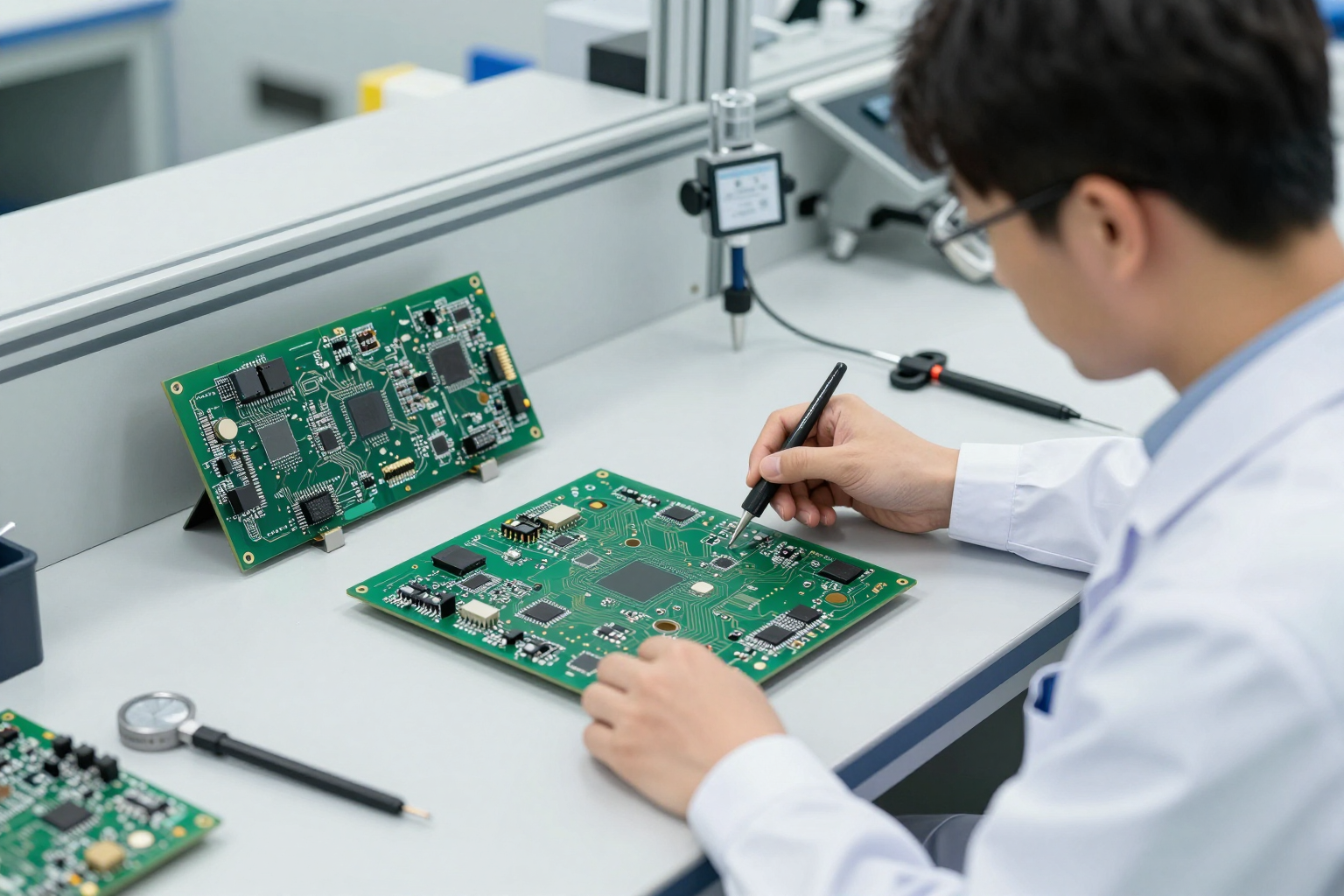
IPC standards for PCB manufacturing come up in almost every serious fabrication or assembly discussion, but many teams still use the phrase too loosely. They may ask for “IPC compliant” boards without explaining whether they are referring to bare-board acceptability, finished-board performance, assembly workmanship, soldering criteria, or documentation expectations.
That gap matters because the IPC framework is not one single rulebook. It is a family of standards used to communicate quality expectations, inspection criteria, and process requirements across design, fabrication, and assembly work. If a sourcing or engineering team references the wrong document, or leaves the requirement vague, quoting slows down and review comments multiply.
A second source of confusion is the relationship between IPC references and UL-related requirements. Buyers sometimes treat IPC and UL as interchangeable signals of quality, even though they answer different questions. IPC usually frames workmanship, acceptability, and process expectations inside electronics manufacturing. UL is typically tied to product safety, recognition, and specific material or end-use requirements.
This guide explains how these standards are usually discussed, which documents come up most often, where UL fits, and what information should be shared with a supplier before production review begins.
What IPC Standards for PCB Manufacturing Actually Cover
These IPC references are best understood as structured tools that help teams define what “acceptable” means at different stages of the job. Some documents are aimed more at bare boards. Others are focused on assembly workmanship, soldering practice, qualification, or documentation. The practical value is not in memorizing every document number. It is in knowing which type of expectation you are trying to communicate.
In a real PCB project, standards language may be used for several different purposes:
- setting visual and dimensional acceptance expectations for bare printed boards
- defining qualification and performance requirements for the board type being ordered
- describing soldering and assembly workmanship expectations for populated assemblies
- aligning customer, manufacturer, and inspector language during review and reporting
- reducing ambiguity when quality issues or deviations need to be discussed
That is why the standards should be treated as communication tools, not as generic marketing shorthand. Saying “build it to IPC” is rarely enough by itself. A better approach is to tell the supplier which class, which stage of the product, and which quality concern matters most.
For example, a prototype built for internal engineering learning may not be documented the same way as a production-intent medical or industrial assembly. The discussion about class level, inspection depth, and evidence package changes with the risk profile of the product.
Which IPC Documents Come Up Most Often in Fabrication and Assembly Reviews
When teams talk about IPC requirements in a PCB job, the same small group of documents usually comes up first. The exact standard set depends on whether the conversation is focused on fabrication, assembly, inspection, or soldering process control.
A practical short list often includes:
- IPC-A-600 for acceptability of bare printed boards
- IPC-6012 for qualification and performance requirements related to rigid printed boards
- IPC-A-610 for acceptability of electronic assemblies
- J-STD-001 for soldered electrical and electronic assemblies
Each document answers a different question. IPC-A-600 is often referenced when the discussion is about visual acceptance of bare-board features. IPC-6012 is more about performance and qualification requirements for rigid boards. IPC-A-610 is commonly used when reviewing populated assembly workmanship. J-STD-001 is frequently raised when soldering process requirements and acceptance expectations are part of the assembly scope.
The important point is that the IPC standards set does not eliminate the need for project-specific notes. Even when a supplier works to recognized IPC references, your release package still needs to state layer count, material, surface finish, copper weight assumptions, mechanical constraints, assembly requirements, and any customer-specific acceptance concerns. Standards help structure the conversation, but they do not replace clear engineering inputs.
If your team is still shaping fabrication expectations, the capabilities page is a useful place to align the scope of bare-board and assembly support. It also helps to compare finish-related requirements against the practical issues described in Understanding PCB Surface Finishes, because finish choice can affect inspection, solderability, and documentation detail.
For background on the standards framework itself, IPC maintains a central IPC standards resource. It is a better reference point than repeating second-hand summaries from vendor marketing pages.
Where UL Fits and How It Differs from IPC Standards for PCB Manufacturing
The difference between UL and IPC is one of the most important things to explain early with customers and buyers. IPC standards for PCB manufacturing usually help define workmanship, qualification, and inspection expectations within the electronics manufacturing process. UL is more closely associated with safety-related recognition and product compliance pathways.
That distinction matters because a board can be discussed using these IPC standards without every project needing a UL-marked outcome. Whether UL matters depends on the product category, end market, customer specification, material system, and certification path tied to the finished product.
A practical way to frame it is this:
- IPC standards help describe how the board or assembly should be made and judged.
- UL-related requirements help describe whether a material system, construction, or end-use safety path must satisfy a recognized compliance framework.
In other words, IPC standards for PCB manufacturing are usually about build and acceptance language. UL concerns are usually about safety recognition, approved constructions, or downstream product certification needs. Teams lose time when they ask for both without explaining which requirement is mandatory, which is preferred, and which applies only to the final product rather than the bare board.
If your product may require that type of safety-driven review, it is worth checking UL's broader compliance resources directly at UL Solutions and confirming the exact requirement with the product owner or certification path. It is safer to clarify early than to assume that “UL material” and “IPC compliant” mean the same thing.
Common Mistakes When Teams Reference Standards During Quoting
The most common quoting problems happen when standards are named without enough context. A buyer may request IPC standards for PCB manufacturing in the RFQ but omit class level, applicable documents, or whether the request applies to the bare board, the assembly, or both.
Another mistake is treating the cited IPC documents as proof that every design detail is already manufacturable. Standards do not replace DFM review. A board can reference the right documents and still have stackup ambiguity, drill structure risks, finish mismatches, or assembly constraints that need engineering feedback.
Teams also create confusion when they mix customer requirements, internal preferences, and certification language into one vague sentence. For example, a note asking for “IPC and UL standard quality” does not tell the supplier what evidence is needed, what class should be used, or what deviations must be approved before build.
Other avoidable mistakes include:
- asking for a standard number without knowing whether it applies to fabrication or assembly
- assuming every supplier uses the same default class level if the RFQ stays silent
- expecting standards language to replace inspection criteria in a drawing or specification package
- failing to say whether prototype flexibility is acceptable or production requirements are already locked
- implying certification or recognition outcomes that are not actually part of the job scope
When these standards are cited precisely, they make quoting cleaner. When they are used as broad shorthand, they often create more email loops instead of fewer.
What to Include When You Ask a Supplier About Standards Compliance
A good request for standards-related review should make the scope obvious. If you want useful feedback before quote or release, send the manufacturing partner enough detail to connect the cited standards with the actual board and assembly package.
At minimum, it helps to provide:
- the board type and whether the request is for bare PCB, PCBA, or both
- the specific IPC documents or class level that the customer expects
- fabrication files, drill data, stackup intent, and finish requirement
- assembly files, BOM, placement data, and any workmanship-sensitive notes when PCBA is included
- a clear statement about whether UL-related material or compliance constraints apply
- known risk areas, such as fine pitch parts, high-voltage spacing, controlled impedance, or special cleanliness concerns
The supplier should also know what decision you need. Are you asking for a quote, a pre-release review, a manufacturability check, or confirmation that the documentation matches a customer requirement? Clear intent makes standards review much faster.
If your team wants that conversation before locking the package, use the contact page and share the board objective, standards expectation, and any compliance-related questions together. That usually leads to a better response than sending files with “build to IPC” and waiting for the factory to guess what matters.
FAQ About IPC Standards for PCB Manufacturing
Do IPC standards for PCB manufacturing guarantee that a board will pass every customer requirement?
No. IPC standards for PCB manufacturing help create a shared workmanship and qualification baseline, but customer drawings, end-product rules, material restrictions, and testing needs can still add requirements beyond that baseline.
Are IPC standards for PCB manufacturing the same as UL approval?
No. The IPC standards set and UL requirements serve different purposes. IPC is generally used to define process and acceptance language in electronics manufacturing, while UL is tied more closely to safety-related recognition or certification paths.
Which document should a buyer mention first?
That depends on whether the concern is bare-board acceptability, rigid-board performance, populated assembly workmanship, or soldering process control. The buyer should reference the requirement that matches the actual scope instead of naming several documents without context.
Should prototype jobs use the same standards language as production jobs?
Sometimes yes, but not always at the same level of documentation or control. Prototype work can still reference the relevant IPC documents, yet the acceptable flexibility around deviations and reporting may differ from production-intent builds.
Conclusion
IPC standards for PCB manufacturing are most useful when they are used precisely. They help teams describe bare-board quality, assembly workmanship, qualification expectations, and review language in a way that suppliers can act on. They do not replace DFM work, and they do not automatically answer UL or end-product safety questions.
When engineers and buyers separate those concerns clearly, quoting becomes faster, review comments become more relevant, and the path from release package to production gets much cleaner.