
FR4 vs Rogers vs Polyimide: How to Choose PCB Material for Frequency, Flexibility, and Build Risk
SUNTOP Electronics
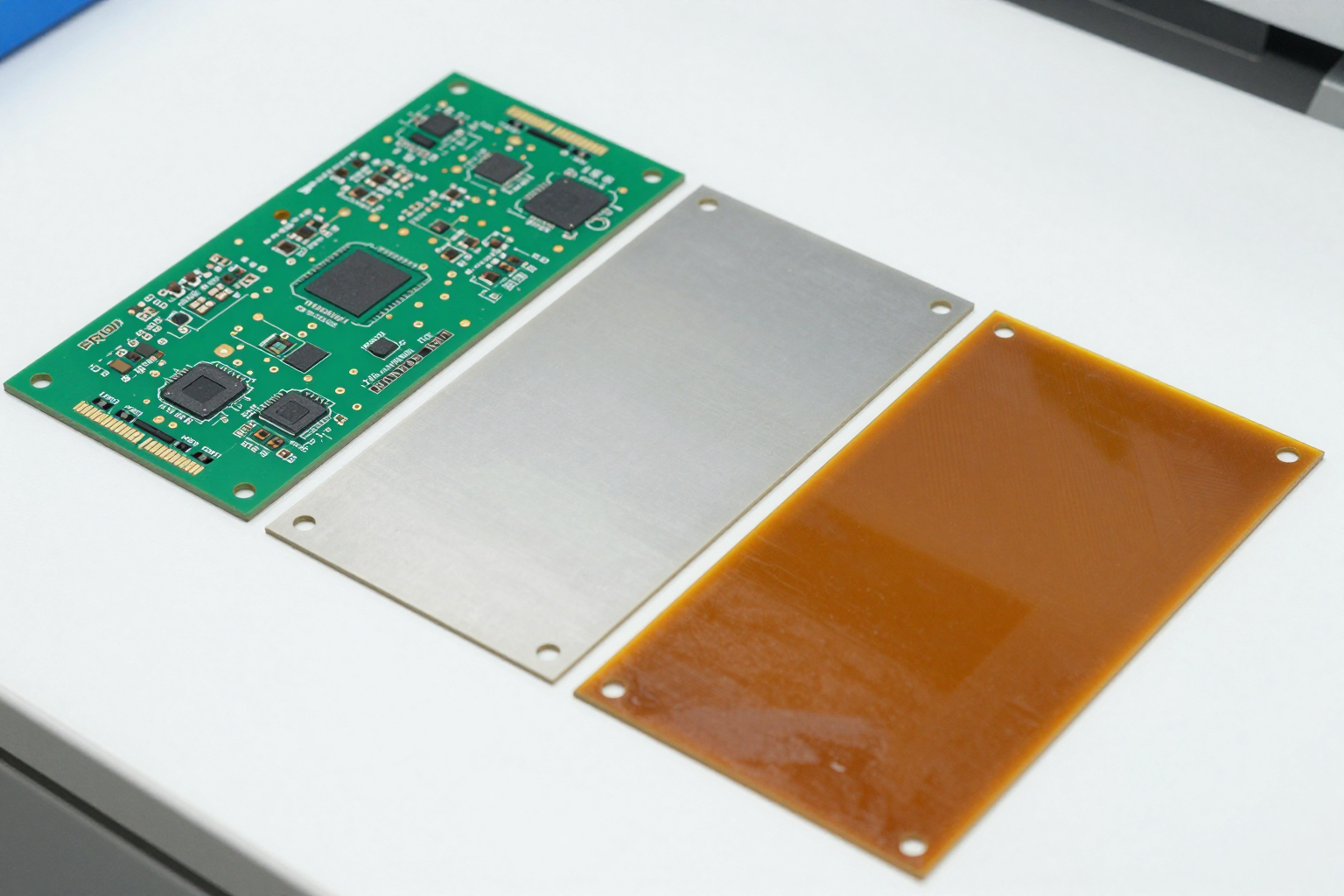
Choosing between FR4 vs Rogers vs Polyimide is not a branding exercise. It is an engineering decision that changes electrical loss, flex behavior, thermal margin, stackup options, and how easily a PCB manufacturer can quote the board without risky assumptions.
Many teams start the FR4 vs Rogers vs Polyimide discussion too late. They wait until impedance control looks difficult, bend requirements appear, or sourcing questions surface during quotation. By that point, material choice is already tied to routing, thickness, assembly planning, and delivery risk.
This guide explains FR4 vs Rogers vs Polyimide in the practical way most hardware teams actually need. The goal is not to say one family is always better. The goal is to help engineers and sourcing teams match the material to frequency range, mechanical use, manufacturability, and supplier communication before fabrication starts.
Why FR4 vs Rogers vs Polyimide Matters in Real PCB Projects
The reason this material comparison matters is simple: each material family solves a different kind of problem.
FR4 is the familiar baseline for standard rigid boards. Rogers-style low-loss laminates enter the discussion when signal integrity, RF behavior, or tighter dielectric stability matters more. Polyimide becomes relevant when the design needs flex capability, higher heat resistance, or a material system that fits rigid-flex and dynamic-bend conditions.
That means a material decision should start with the board's real job. If the design is a conventional rigid digital board with manageable loss and no flex section, FR4 may be the cleanest answer. If the board is sensitive to insertion loss or controlled impedance over longer paths, Rogers or another low-loss system may deserve review. If the product must bend, fold, or survive repeated flexing, polyimide may stop being optional.
Where FR4 Fits Best
In many projects, the discussion should begin with an honest question: is standard FR4 already good enough?
FR4 remains the most practical option for a large share of rigid PCB work because it is widely available, economical, and familiar to most fabricators. It works well when the design window is forgiving, the board is mechanically rigid, and the team wants the simplest sourcing path.
FR4 often fits best when you need:
- standard rigid board construction
- moderate signal-speed requirements rather than RF-grade loss control
- broad supplier availability and easier cost comparison
- straightforward multilayer fabrication without specialty material handling
It also gives teams a useful baseline for quoting. If a design does not truly require a specialty laminate, staying with FR4 can reduce cost and make second-source planning easier. Before locking the choice, teams can sanity-check dielectric assumptions with the FR4 Dielectric Constant tool and confirm whether the electrical targets are still realistic.
When Rogers Is Worth the Extra Cost and Sourcing Effort
For signal-sensitive designs, the choice becomes more than a cost comparison. It becomes a performance-risk comparison.
Rogers is often reviewed when the board includes RF paths, microwave structures, tighter impedance tolerance, or channel-loss requirements that standard FR4 may not support consistently enough. Low-loss laminates can help teams manage dielectric stability and attenuation more predictably, especially when trace lengths or frequency ranges make ordinary board assumptions less comfortable.
That does not mean Rogers is automatically correct. It means the board may need a laminate with clearer electrical behavior than commodity FR4. Rogers itself outlines the intent of these material families in its high-frequency laminate overview.
Use Rogers-style materials when the design brief clearly includes electrical demands that justify the tradeoff: higher cost, more limited sourcing options, and the need for more deliberate stackup communication.
When Polyimide Belongs in the Discussion
The decision changes again when the board is not purely rigid.
Polyimide is commonly associated with flexible circuits and rigid-flex designs because it supports bendable constructions and handles heat differently from ordinary rigid-board laminates. If the product must fold into an enclosure, survive repeated motion, or combine rigid and flexible regions, polyimide belongs in the conversation early.
Polyimide may also appear in some high-temperature or mechanically demanding applications, but it should not be chosen casually. Once polyimide enters the design, the manufacturing discussion changes. Bend radius, copper treatment, stiffeners, coverlay, and assembly handling all become more important than they were in a simple rigid FR4 stackup. For background on the material family itself, see the polyimide overview.
In other words, polyimide is not a prestige upgrade. It is usually a fit-for-purpose choice driven by flex or temperature needs.
How to Compare Electrical, Mechanical, and Manufacturing Tradeoffs
A useful FR4 vs Rogers vs Polyimide review should compare the board across three dimensions, not just one.
First, compare electrical requirements. If the board depends on lower loss, more stable dielectric behavior, or tighter controlled-impedance execution, use the Online Impedance Calculator as an early sense check and discuss the stackup with your fabricator before release.
Second, compare mechanical reality. A rigid enclosure-friendly board and a flexing interconnect do not live in the same material world. If the design must bend, fold, or survive repeated dynamic motion, the mechanical case for polyimide may outweigh the simplicity of FR4.
Third, compare manufacturing and sourcing risk. FR4 is easier to source broadly. Rogers-style laminates may require more deliberate supplier alignment. Polyimide changes fabrication flow and assembly handling. The right answer is the one that meets the product need without introducing avoidable complexity.

This fallback comparison visual keeps the article grounded in the real tradeoff: standard rigid board construction versus flex-capable polyimide construction with different fabrication implications.
How to Communicate Material Intent Clearly Before Quoting or Production
Good material decisions still fail when the release package is vague.
If you already know the board should stay on FR4, say so clearly. If a Rogers family or another low-loss laminate is required, define the acceptable material system and what electrical target is driving it. If the design depends on polyimide because of flex behavior, make that mechanical intent visible in the stackup and fabrication notes.
A clean package should tell the manufacturer what can be substituted, what cannot, and which board behavior matters most. That helps avoid quotes based on the wrong laminate assumptions. If your team needs help aligning stackup, material direction, and manufacturability before release, use the contact page to start the discussion before production files are frozen.
FAQ About FR4 vs Rogers vs Polyimide
Is FR4 vs Rogers vs Polyimide mainly a frequency question?
No. Frequency matters, but FR4 vs Rogers vs Polyimide also includes flex requirements, thermal conditions, sourcing flexibility, and fabrication method.
Is Rogers always better than FR4?
No. Rogers is only better when the board's electrical targets justify the extra material and sourcing complexity.
Should polyimide replace FR4 for any high-temperature board?
Not automatically. In FR4 vs Rogers vs Polyimide, polyimide should be chosen because the design actually needs its flex or thermal behavior, not because it sounds more advanced.
Conclusion
A strong FR4 vs Rogers vs Polyimide decision starts with the real product requirement, not with material hype. FR4 is still the right answer for many rigid boards. Rogers-style laminates deserve attention when loss and dielectric behavior matter more. Polyimide belongs where flex or temperature demands change the construction itself. When teams define those tradeoffs early, quotes become clearer and redesign risk goes down.