
AOI Inspection in PCBA: What It Catches, What It Misses, and How to Use It Well
SUNTOP Electronics
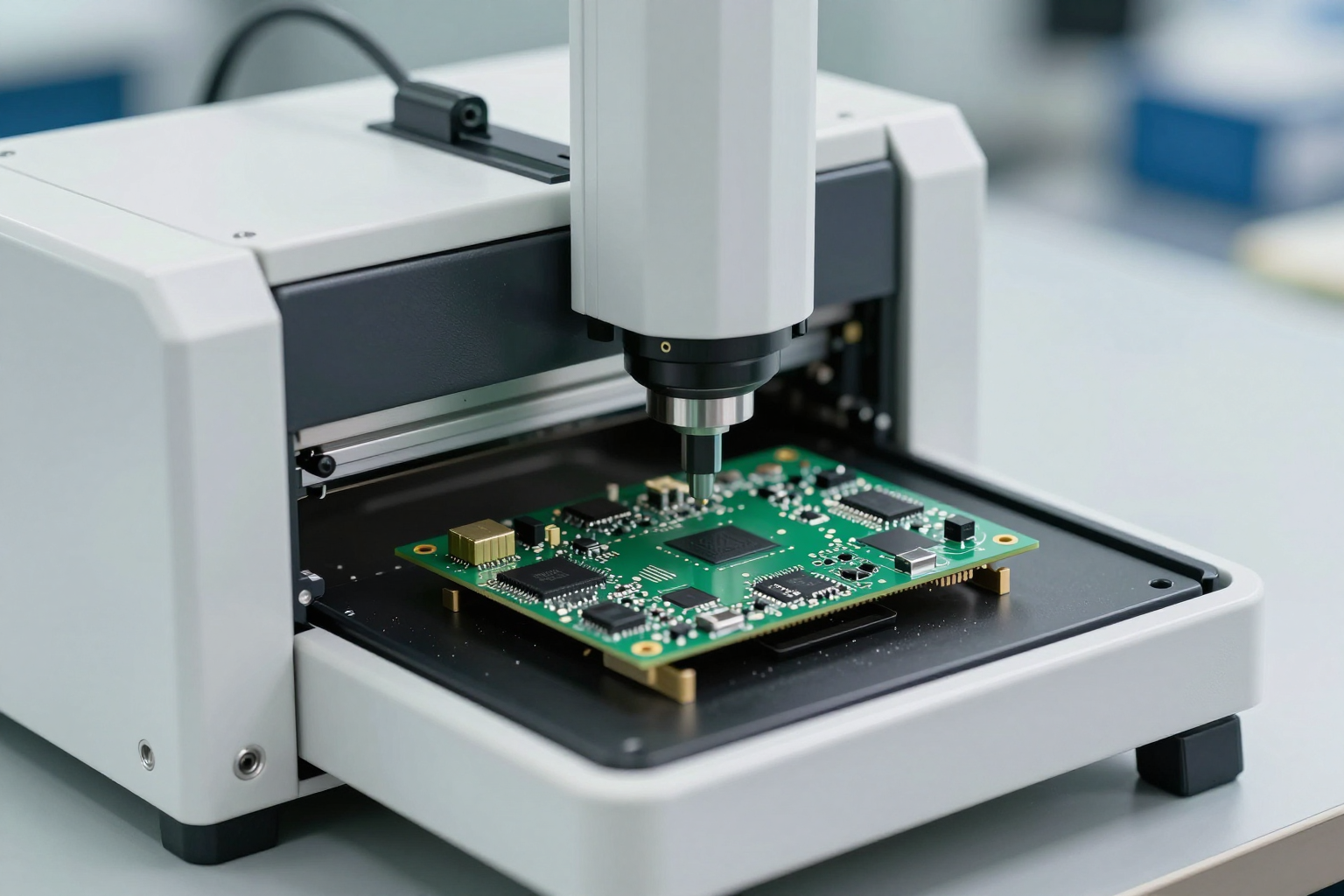
AOI inspection in PCBA is one of the most common quality-control topics buyers ask about, but it is also one of the easiest to misunderstand. Many teams hear that a supplier includes AOI and assume that means the board has been fully validated. In practice, that is not what automated optical inspection is designed to do.
The real value of AOI inspection in PCBA is that it gives a fast, repeatable way to catch many visible assembly defects before bad boards move deeper into test, rework, or shipment. It is especially useful when a program needs scalable inspection after placement and reflow, but it should still be understood as one layer in a broader quality plan.
This guide explains AOI inspection in PCBA in practical terms for engineering teams, sourcing managers, and OEM buyers. It covers what AOI can catch well, where its visibility limits matter, what design and process choices affect inspection quality, and when it makes sense to combine AOI with other verification methods.
What AOI Inspection in PCBA Means and Where It Fits
At a simple level, AOI inspection in PCBA means using camera-based optical systems to inspect an assembled board for visible defects. A machine captures images of the populated PCB and compares what it sees against expected component placement, solder-joint appearance, polarity, and related assembly criteria. If you want a neutral overview of the method itself, automated optical inspection is the core concept behind the process.
In a normal SMT flow, AOI is usually placed after solder paste printing, after component placement, after reflow, or at selected checkpoints depending on the line structure. That makes AOI inspection in PCBA valuable because it can surface visible issues early, before a faulty board consumes more time in later test or assembly stages.
The key point is that AOI is an inspection method, not a full electrical or functional proof step. It does not replace every other control in a program. Instead, it helps teams build a faster and more consistent visual inspection layer around real production risk.
What AOI Catches Well
When the board, lighting, program tuning, and defect library are all aligned, AOI inspection in PCBA is very good at finding visible assembly problems that should never be allowed to pass quietly into downstream operations.
Common examples include:
- missing components
- obvious polarity errors on visually distinguishable parts
- skewed, shifted, or tombstoned small SMT components
- visible solder bridges
- some insufficient-solder or excess-solder conditions
- obvious orientation issues on connectors or ICs that present clear visual cues
That is why AOI is so often used as a screening tool in NPI and volume production. It helps the assembly team catch surface-level problems quickly and with more consistency than relying only on human visual review.
It is also useful commercially. When a buyer asks what kind of inspection is included, AOI is often part of the answer because it improves repeatability and shortens the feedback loop between process output and defect detection.
Where AOI Has Limits
The biggest mistake teams make with AOI inspection in PCBA is assuming that visible inspection equals complete defect coverage. AOI can only judge what the cameras, angles, lighting, and programmed rules are actually able to see.
That means AOI inspection in PCBA has limits whenever the defect is hidden, electrically subtle, or dependent on product behavior instead of visible appearance. Bottom-side joints under some packages, hidden BGA connections, internal opens, wrong component values with similar markings, intermittent behavior, and firmware-related failures are all outside the core strength of AOI.
For that reason, AOI should not be described as a replacement for broader verification. If a program needs electrical confirmation, teams may still need methods such as in-circuit test, functional test, X-ray review, or manual inspection at selected points. The right mix depends on board design, product risk, access for probing, and the business cost of a field escape.
A practical way to frame AOI is this: it is excellent for visible assembly defects, useful for process feedback, and limited whenever the failure mode cannot be seen clearly from the outside.
Design and Process Choices That Make AOI More Useful
Even a good machine will struggle if the board and process make inspection unnecessarily difficult. That is why AOI inspection in PCBA works best when design, assembly, and inspection expectations are considered together instead of treated as separate topics.
Several factors influence inspection effectiveness:
- component spacing that allows clearer visibility
- orientation consistency where practical
- silkscreen and markings that do not create confusion around critical features
- board support and process stability that reduce variation in image capture
- realistic expectations around hidden joints, dense shadowing, and tall neighboring parts
In other words, AOI gets stronger when the product is designed and assembled with inspection visibility in mind. Very dense placement, mixed-height components, reflective surfaces, or crowded connector zones do not automatically make AOI impossible, but they do make programming, tuning, and result review more demanding.
This is also where article-level planning should connect back to supplier discussion. If your project has inspection-sensitive placement constraints, it helps to raise those concerns before the build starts rather than after false calls, escapes, or repeated clarifications begin to slow the line.
When AOI Should Be Combined with Other PCBA Verification Methods
No serious production team treats one method as the answer to every risk. The better question is how AOI fits into the rest of the verification stack.
For many products, AOI is the first strong visual filter. After that, the board may still need electrical or functional confirmation depending on product maturity and failure consequence. A simple prototype run may rely on AOI plus targeted bring-up checks. A stable production program may add ICT, functional test, or X-ray where coverage gaps matter more.
That layered approach is why the broader ICT vs FCT vs AOI guide is still useful. It helps teams compare inspection with electrical and behavioral test instead of treating all three as interchangeable labels. And if the build is moving toward full PCB assembly services, inspection scope should be discussed as part of the production plan rather than left as a vague assumption.
How to Prepare a Better AOI Review Discussion with Your PCBA Supplier
The most productive buyer-supplier conversations about AOI inspection in PCBA are specific. Instead of asking only whether AOI is available, explain what the product stage is, what defect risks are most important, and which limits the team already understands.
A better review discussion usually includes:
- whether the build is prototype, pilot, or repeat production
- which packages or areas are hardest to inspect visually
- whether hidden-joint packages are present
- whether the board also needs electrical or functional confirmation
- what failure consequences matter most to the program
- how rework, debug speed, and traceability should be handled
This kind of framing helps the supplier answer with process reality instead of generic marketing language. If your team is preparing a quote or inspection review, the contact page is the right place to align AOI expectations before release.
FAQ About AOI Review in PCB Assembly
Is AOI enough by itself for every board?
No. AOI inspection in PCBA is strong for visible assembly defects, but it does not prove complete electrical integrity or final product behavior.
Does AOI help more in prototype or production?
It can help in both. In prototypes, it speeds up visible defect feedback. In production, it adds repeatable process control and screening.
Why do some boards still need other inspection or test methods?
Because some defects are hidden, electrical, or functional rather than visible. Those risks sit outside the main strength of AOI inspection in PCBA.
What should buyers ask a supplier about AOI?
Ask what AOI covers, where its visibility limits are, whether hidden-joint packages need another method, and how AOI fits with the rest of the inspection and test plan.
Conclusion
Used correctly, AOI inspection is a practical and valuable quality layer. It can catch many visible defects quickly, improve process feedback, and help assembly teams prevent obvious issues from moving forward.
Used incorrectly, it becomes a misunderstood checkbox that sounds broader than it really is. The better approach is to treat AOI as part of a layered inspection strategy, align its scope with product risk, and discuss its real limits early with the manufacturing partner.