
ICT vs FCT vs AOI: What Each PCBA Test Method Catches and When to Use It
SUNTOP Electronics
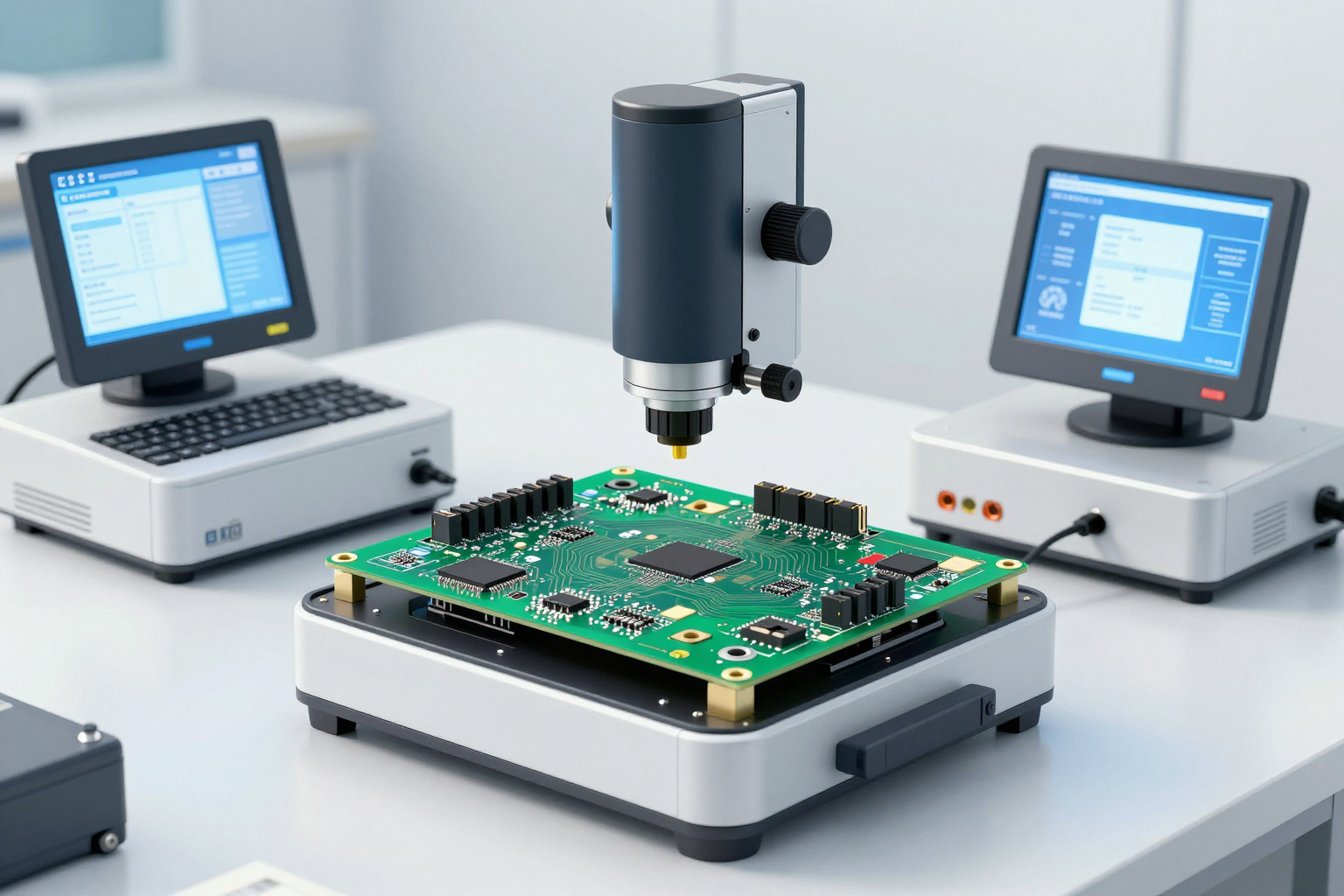
Choosing between ICT vs FCT vs AOI is not really about picking a single “best” test. It is about understanding what kind of defects you are trying to catch, what stage of the build you are in, and how much setup cost the program can support.
When teams ask about ICT vs FCT vs AOI, they are usually trying to answer a practical production question: which method finds the failures that matter before boards ship, and which method adds cost without enough return. That answer changes with product maturity, board complexity, volume, access for probing, and the business risk of an escaped defect.
This guide explains ICT vs FCT vs AOI in the context of real PCB assembly work. Instead of treating the three methods as interchangeable buzzwords, it shows what each one is actually good at, where each one has blind spots, and how buyers and engineering teams should frame test expectations when asking a supplier for quote or process review.
What ICT, FCT, and AOI mean in PCBA testing
A simple way to understand ICT vs FCT vs AOI is to separate inspection from electrical verification.
AOI, or automated optical inspection, looks at the assembled board and checks whether visible solder joints, polarity, part presence, and some placement issues appear correct. It is fast and useful, but it only sees what the camera system and inspection program can evaluate.
ICT, or in-circuit test, uses a fixture or probing method to electrically check individual nets, components, shorts, opens, and some analog values on the assembled board. It is stronger than AOI for many hidden electrical issues, but it depends on physical access and fixture planning.
FCT means functional test. Instead of checking parts and nets one by one, it powers the board in a controlled way and verifies whether the product or subassembly behaves as intended under a defined test procedure. That makes FCT valuable for system-level confidence, but it also means defect isolation can be less direct if the board simply fails a functional step.
For most teams, the right ICT vs FCT vs AOI discussion starts here: AOI is visual inspection, ICT is structured electrical verification, and FCT is behavioral proof that the assembled board can actually perform its intended job.
What AOI can catch well and where it has limits
AOI is often the first method discussed in ICT vs FCT vs AOI because it is widely used, scalable, and easier to deploy than a dedicated electrical fixture. In many NPI and production flows, AOI provides a fast screening layer after SMT placement and reflow.
AOI is especially useful for catching:
- missing components
- visibly skewed or tombstoned parts
- obvious solder bridging
- polarity or orientation problems that are visually exposed
- some insufficient or excessive solder conditions
That makes AOI a strong tool for repeatable surface-level defect detection. It can improve feedback speed and reduce the number of obviously bad boards passed into later stages.
But AOI has hard limits. It does not directly prove that every net is electrically connected the way the circuit needs. It also struggles when joints are hidden under packages, when acceptable solder appearance is harder to classify, or when the failure mode is functional rather than visual. A board can pass AOI and still fail because of a wrong value part, an intermittent contact, a hidden open, programming trouble, or an interface issue that only appears when the board is powered.
That is why AOI should be treated as one layer in the ICT vs FCT vs AOI decision, not as a complete replacement for electrical or system-level validation.
What ICT is best at and what setup it requires
In an ICT vs FCT vs AOI comparison, ICT is usually the method that gives the strongest structured fault isolation at the board level. With the right access and fixture design, ICT can detect shorts, opens, wrong component values, missing parts, and many assembly defects that visual inspection alone cannot confirm reliably.
ICT works best when the product has:
- enough test-point access for probing
- stable design maturity that justifies fixture effort
- production volume high enough to support setup cost
- clear electrical limits for pass/fail checks
Its main advantage is speed with specificity. When ICT flags a fault, the failure is often easier to localize than in a broad functional test. That helps debugging, repair flow, and process control.
Its main tradeoff is preparation. Teams comparing ICT vs FCT vs AOI often underestimate how much fixture access, board support, pad strategy, and program definition matter before ICT becomes practical. Dense boards, fine-pitch packages, double-sided constraints, or designs with limited probing access can make ICT coverage more expensive or incomplete.
This is also why test strategy should be discussed before release, not after assembly has already started. If your product needs a stronger electrical test plan, it helps to align that requirement early with the supplier's quality testing services instead of assuming coverage can be added later with no layout impact.
What FCT adds beyond inspection and in-circuit test
In the ICT vs FCT vs AOI conversation, FCT matters because customers do not buy correct solder joints. They buy a board or product that works.
FCT checks that the assembled board behaves correctly in a defined operating scenario. Depending on the product, that may include power-up behavior, interface response, sensor reading, communication, programming verification, analog performance windows, or controlled I/O activity. In other words, FCT asks whether the board performs its intended function, not just whether it looks right or measures correctly at isolated nodes.
That gives FCT an important role when a product has firmware interaction, interface timing, calibration steps, or functional risks that AOI and ICT cannot represent fully. It is also a useful final screen before shipment when the business consequence of a field failure is high.
The limit is that FCT is not always the fastest way to isolate root cause. When teams compare ICT vs FCT vs AOI, FCT is often the broadest real-world check, but it can be slower to debug if the board fails and the test result does not immediately reveal whether the issue came from assembly, programming, component value, fixture connection, or the test routine itself.
For that reason, FCT often works best as part of a layered plan rather than as the only control step.
How to choose a practical test mix for your PCB assembly program
When deciding ICT vs FCT vs AOI, the better question is usually not “which one should we use?” but “what failure modes are most important for this product, and what mix is realistic for the stage and volume we are in?”
A practical pattern looks like this:
- AOI for fast visual defect screening
- ICT where electrical coverage and fixture access justify the setup
- FCT where the shipped unit must prove real behavior before release
For prototype runs, the balance may lean toward AOI plus targeted functional checks because fixtures are not yet economical. For stable volume builds, the answer may shift toward AOI plus ICT plus a defined functional screen. For high-risk applications, teams may need all three with stronger traceability and failure analysis discipline.
This is where supplier discussion matters. If you are asking for PCB assembly services on a board that needs explicit test planning, do not leave the test conversation at “standard inspection included.” Explain the product stage, expected shipment risk, likely volume, and whether the supplier should prepare for AOI only, AOI plus ICT, AOI plus FCT, or a combined approach. If the program still needs review, use the contact page to align test expectations before quote release.
The best ICT vs FCT vs AOI choice is the one that matches real defect risk, real manufacturability, and real commercial constraints instead of following a generic checklist.
FAQ about ICT, FCT, and AOI
Is AOI enough on its own for most PCB assemblies?
Sometimes for simple products and early builds, but not always. AOI is valuable for visual defects, yet it does not replace electrical or functional confirmation when failure risk is higher or defect modes are hidden.
Should every production board get ICT?
No. ICT is powerful, but it depends on access, fixture cost, design maturity, and volume. Some products justify it strongly; others do not.
When is FCT most important?
FCT becomes more important when board behavior depends on firmware, interfaces, calibration, power sequencing, or product-level operation that cannot be proven through visual inspection alone.
How should buyers frame the ICT vs FCT vs AOI discussion with a supplier?
State the product stage, target volume, likely failure consequences, expected debug speed, and whether you need visual screening, electrical fault isolation, functional proof, or a combination. That gives the supplier enough context to recommend a realistic plan.
In practice, ICT vs FCT vs AOI is not a theoretical argument. It is a test-coverage decision tied to board design, build volume, failure cost, and customer risk. Teams that define that test strategy early usually get cleaner quotes, better fixture decisions, and fewer surprises after assembly starts.