
Automotive PCB Assembly Guide: Reliability, Process Control, and Supplier Review Points
SUNTOP Electronics
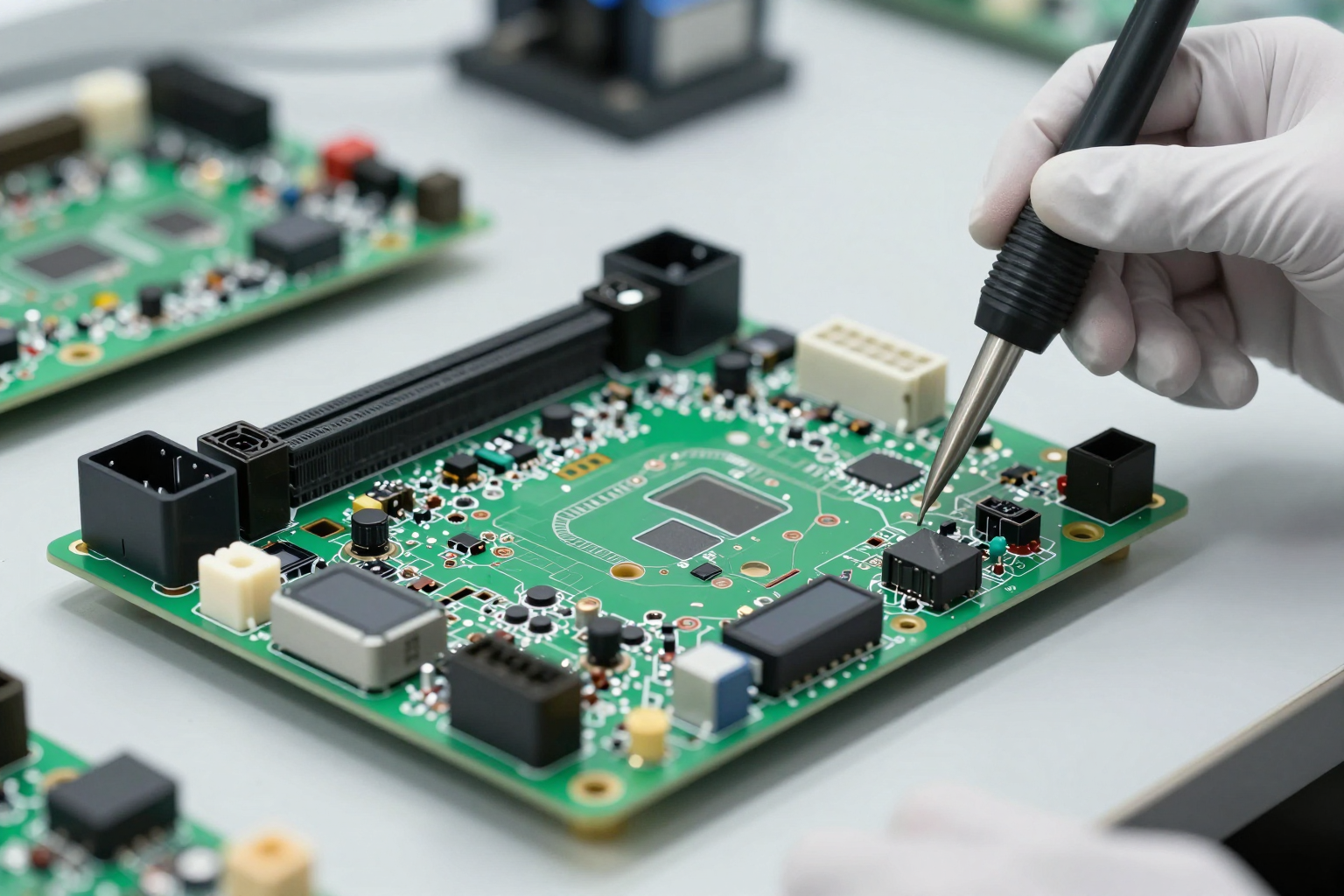
Automotive electronics teams usually expect more from a supplier than a standard build-and-ship workflow. When the product may end up in a vehicle control path, power subsystem, sensor module, charging unit, or cabin electronics platform, automotive PCB assembly has to be reviewed with tighter discipline around process control, traceability, failure analysis, and documentation.
That does not mean every project follows the same qualification path. It does mean that automotive PCB assembly should be discussed with clearer assumptions than general-purpose PCBA. Buyers and engineers need to understand what the board will face in the field, what defects are most costly, and what production controls matter before quote release.
This guide explains automotive PCB assembly in practical terms. The goal is to help engineering teams and sourcing managers ask better supplier questions, reduce avoidable onboarding delays, and prepare a cleaner handoff package before fabrication, assembly, inspection, and test planning begin.
What makes automotive PCB assembly different from general PCBA
The main difference is not that automotive PCB assembly uses completely different physics. The difference is that the application risk is often higher, and the expected consistency around process, documentation, and quality response is usually stricter.
A general consumer board may still require excellent workmanship, but the business consequence of one escaped defect is not always the same as in a vehicle-related product. Automotive programs often push suppliers to think more carefully about lot traceability, component control, revision discipline, test coverage, and how nonconforming product will be isolated and reported.
In practice, supplier qualification for vehicle-electronics builds is shaped by three linked questions:
- What environment the board will experience
- What failure modes matter most
- What evidence the supplier can provide that the process is being controlled
That is why buyers reviewing a vehicle-electronics assembly partner should move beyond generic claims like “high quality” and ask how the supplier manages incoming material control, soldering process consistency, inspection flow, and issue containment.
Reliability, environment, and process-control priorities in automotive electronics
In automotive electronics, reliability discussion should begin with use condition rather than marketing language. Automotive PCB assembly may need to withstand vibration, thermal cycling, connector stress, moisture exposure, contamination risk, or long service-life expectations depending on the product category.
These conditions affect board design, assembly method, and supplier review. Heavy components may need better mechanical support. Connector areas may deserve extra attention during soldering and inspection. Thermal mass differences can change reflow behavior. Cleaning, conformal coating, or selective process steps may also matter in some programs.
Process control matters because consistent output is rarely the result of a single final inspection gate. For vehicle-related production, teams should ask how stencil control, placement verification, reflow profile management, operator instructions, inspection criteria, and rework authorization are handled across repeated lots.
Some customers will also ask how the supplier aligns with broader automotive quality-system expectations such as IATF 16949 or how workmanship review maps to relevant IPC standards. Even when a project does not require a formal automotive certification path, those references help frame what disciplined process communication should look like.
Design and documentation checks before sending an automotive PCBA for quote
A surprising number of delays in automotive PCB assembly start before production, not on the line. Quote and onboarding problems often come from incomplete release data, unclear approved substitutions, missing test expectations, or mechanical details that were not highlighted early enough.
Before sending an automotive build package, it helps to confirm:
- Gerber, drill, BOM, and pick-and-place data are aligned to the same revision
- Critical polarity, orientation, and approved manufacturer part numbers are clear
- Connector, heat-generating, and heavy-part constraints are explicitly flagged
- Programming, labeling, serialization, or traceability expectations are stated in writing
- Inspection and test requirements are described instead of assumed
For vehicle-program PCBA work, clear documentation reduces both quoting friction and hidden risk. If the product needs special handling for moisture-sensitive devices, selective soldering, coating, fixture access, or controlled packaging, that information should be in the handoff package before the supplier is forced to guess.
Supplier review points for traceability, test, and quality communication
When evaluating support for a vehicle-related PCBA program, supplier review should focus on operational clarity rather than broad promises. A useful discussion is usually built around traceability, test coverage, containment response, and how quality issues are communicated back to the customer.
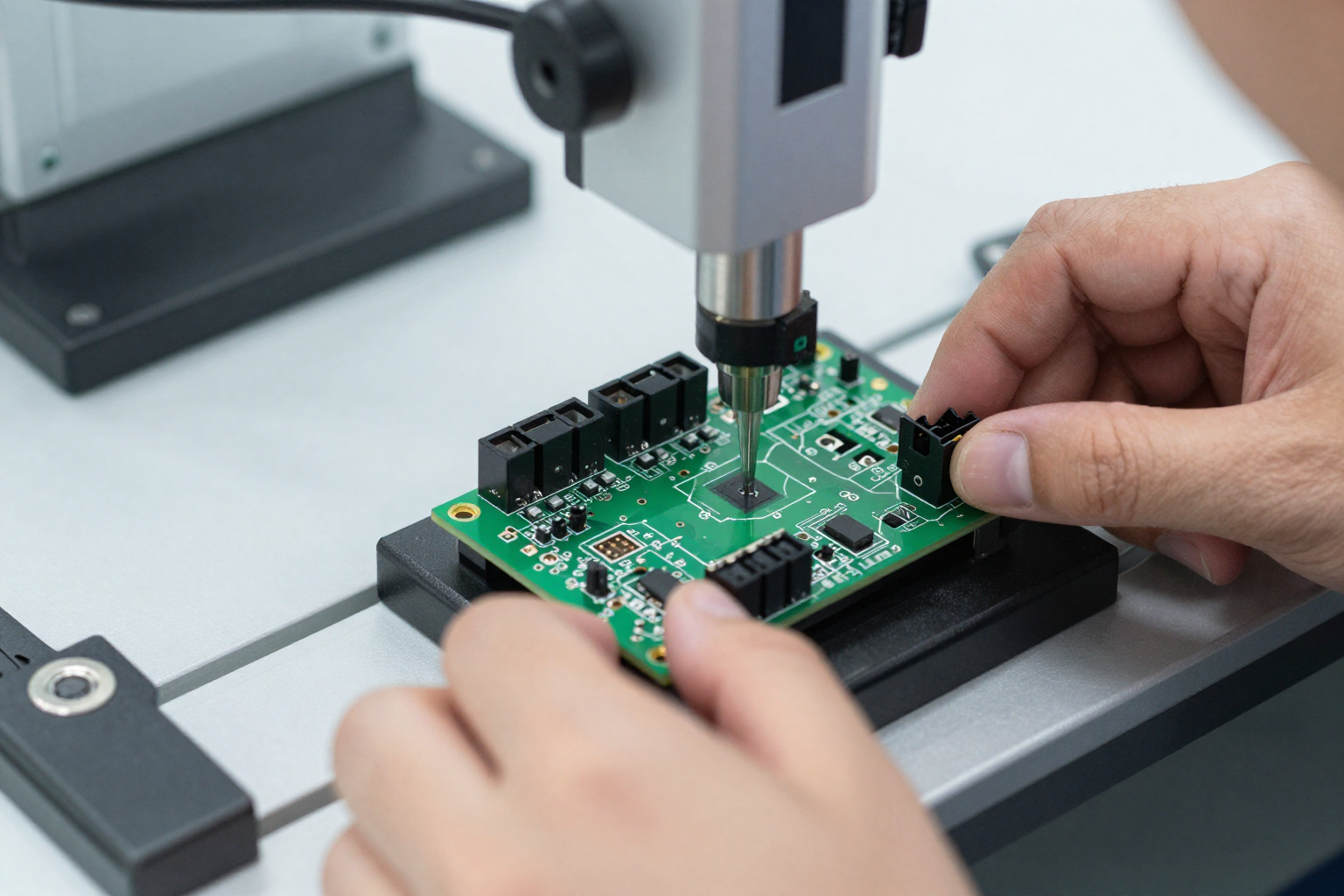
Supplier review should confirm that test access, connector handling, and fixture setup are practical before production starts.
Ask practical questions such as:
- What material and lot information can be traced at board or batch level
- How process deviations are documented and escalated
- What inspection and electrical test steps are standard versus optional
- How failed boards are segregated, analyzed, and reported
- How engineering changes are controlled across prototype and production stages
A supplier with strong process discipline for vehicle electronics should be able to explain those items concretely. If your project needs broader build support, reviewing the available PCB assembly services and quality testing services can help align the expected process scope before RFQ.
Common mistakes when sourcing automotive PCB assembly support
One common mistake is treating automotive PCB assembly as ordinary PCBA plus a stricter inspection request. In reality, the supplier may need more context around product environment, component risk, traceability depth, documentation flow, and test intent before giving a realistic answer.
Another mistake is assuming every supplier interprets “automotive” the same way. Some teams use the term for any board going into a vehicle, while others reserve it for programs with specific customer, audit, or compliance expectations. That gap can cause major confusion if the buyer does not explain the true application and quality expectations.
A third mistake in sourcing vehicle-electronics PCBA support is waiting too long to discuss special process needs. If the board has unusual connectors, power devices, coating requirements, serial tracking rules, or functional test expectations, late disclosure can change tooling, process setup, scheduling, and cost.
The last mistake is asking for guarantees that are not backed by defined process inputs. Good vehicle-electronics PCBA results come from design readiness, clear release data, controlled sourcing, disciplined assembly, and realistic test planning. They do not come from generic “zero defect” language.
FAQ about automotive PCB assembly
Does automotive PCB assembly always require special certification?
Not always. Requirements for this kind of vehicle-related PCBA work depend on the customer program, product function, and supply-chain expectations. Some projects demand formal quality-system alignment and deeper documentation, while others mainly need stronger traceability and process communication than ordinary PCBA.
What should buyers send before asking for an automotive PCB assembly quote?
At minimum, buyers should provide the latest release package, expected build stage, annual or pilot volume context, critical parts list, special handling notes, and test expectations. The clearer the package, the easier it is for a supplier supporting vehicle-related PCBA to review risks early.
Is AOI enough for automotive PCB assembly quality control?
Usually not by itself. AOI is useful, but vehicle-electronics assembly work often needs a broader plan that may include electrical test, functional checks, traceability records, and a defined response path when failures appear.
Conclusion
Good planning for vehicle-electronics assembly starts before the first board is built. When engineering and sourcing teams define reliability priorities, documentation quality, traceability expectations, and test intent early, suppliers can review the job with fewer assumptions and fewer late surprises.
If your team is preparing a vehicle-related PCB or PCBA program and wants a practical manufacturability and process review, use the contact page to align requirements before final release.