
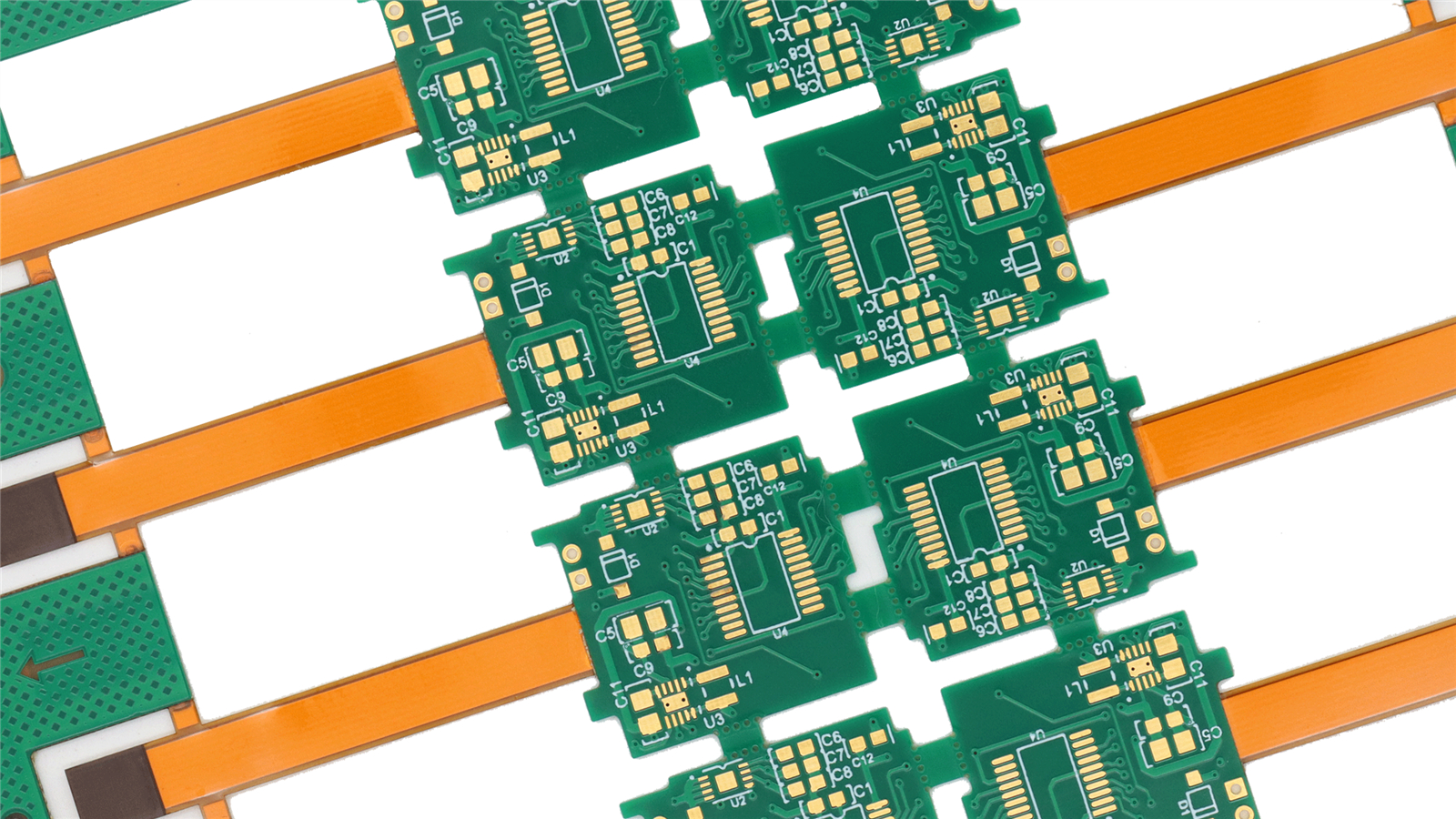
Rígido-Flexível
(98 avaliações)
Rígido-Flexível
PCB Rígido-Flexível
Combinação de partes rígidas e flexíveis para soluções complexas de embalagem 3D
Características principais
Design 3D
Arranjo espacial complexo
Estrutura Híbrida
Partes Rígidas + Flexíveis
Economia de Espaço
Elimina conectores
Alta Confiabilidade
Juntas de solda reduzidas
Especificações
| Contagem de camadas | Até 20 camadas |
| Espessura Rígida | 0.4mm - 3.2mm |
| Espessura Flexível | 0.1mm - 0.3mm |
| Via Mínima | 0.1mm diâmetro |
| Aplicações | Médica, Aeroespacial, Móvel |
Considerações de engenharia
Revisão de fabricação antes da cotação
Rigid-flex production depends on both electrical stackup and mechanical behavior. Early review reduces risks around bend areas, stiffeners, lamination, assembly handling, and final fit.
- Define bend radius, bend direction, dynamic or static flexing, flex length, stiffener zones, and the number of expected bend cycles.
- Review rigid-to-flex transitions, coverlay, adhesive, layer symmetry, copper features, component keepouts, and mechanical tolerances together.
- Share the 3D mechanical context, assembly sequence, support tooling, and any constraints around connectors, shields, or enclosure fit.
Aplicações típicas
Médica, Aeroespacial, Móvel