
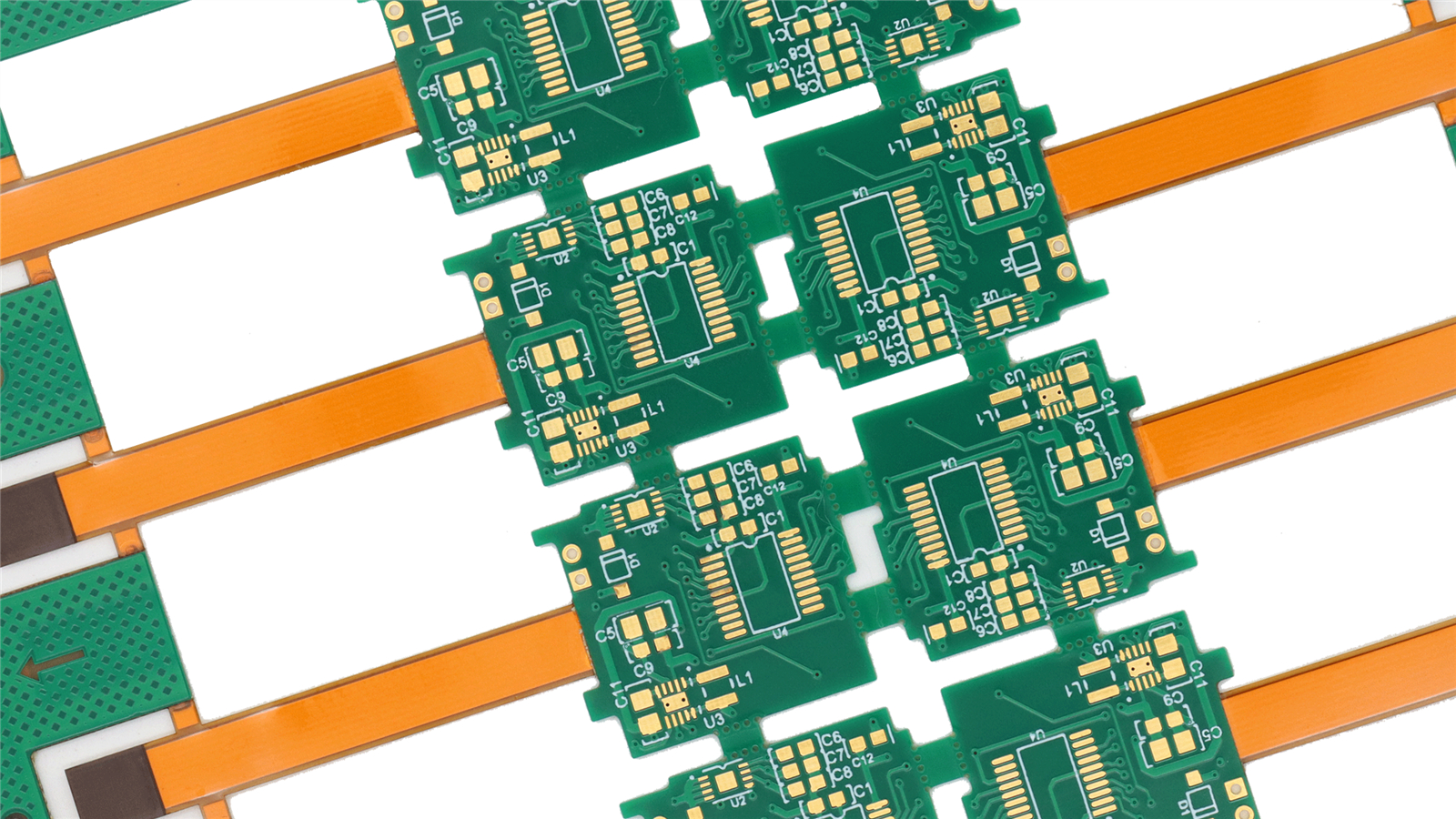
Rígido-Flexible
(98 reseñas)
Rígido-Flexible
PCB Rígido-Flexible
Combinación de partes rígidas y flexibles para soluciones complejas de empaquetado 3D
Características clave
Diseño 3D
Arreglo espacial complejo
Estructura Híbrida
Partes Rígidas + Flexibles
Ahorro de Espacio
Elimina conectores
Alta Fiabilidad
Juntas de soldadura reducidas
Especificaciones
| Número de capas | Hasta 20 capas |
| Espesor Rígido | 0.4mm - 3.2mm |
| Espesor Flexible | 0.1mm - 0.3mm |
| Vía Mínima | 0.1mm diámetro |
| Aplicaciones | Médica, Aeroespacial, Móvil |
Consideraciones de ingeniería
Revisión de fabricación antes de cotizar
Rigid-flex production depends on both electrical stackup and mechanical behavior. Early review reduces risks around bend areas, stiffeners, lamination, assembly handling, and final fit.
- Define bend radius, bend direction, dynamic or static flexing, flex length, stiffener zones, and the number of expected bend cycles.
- Review rigid-to-flex transitions, coverlay, adhesive, layer symmetry, copper features, component keepouts, and mechanical tolerances together.
- Share the 3D mechanical context, assembly sequence, support tooling, and any constraints around connectors, shields, or enclosure fit.
Aplicaciones típicas
Médica, Aeroespacial, Móvil