
Reflow Soldering Profile Optimization: How to Balance Wetting, Defect Risk, and Component Safety
SUNTOP Electronics
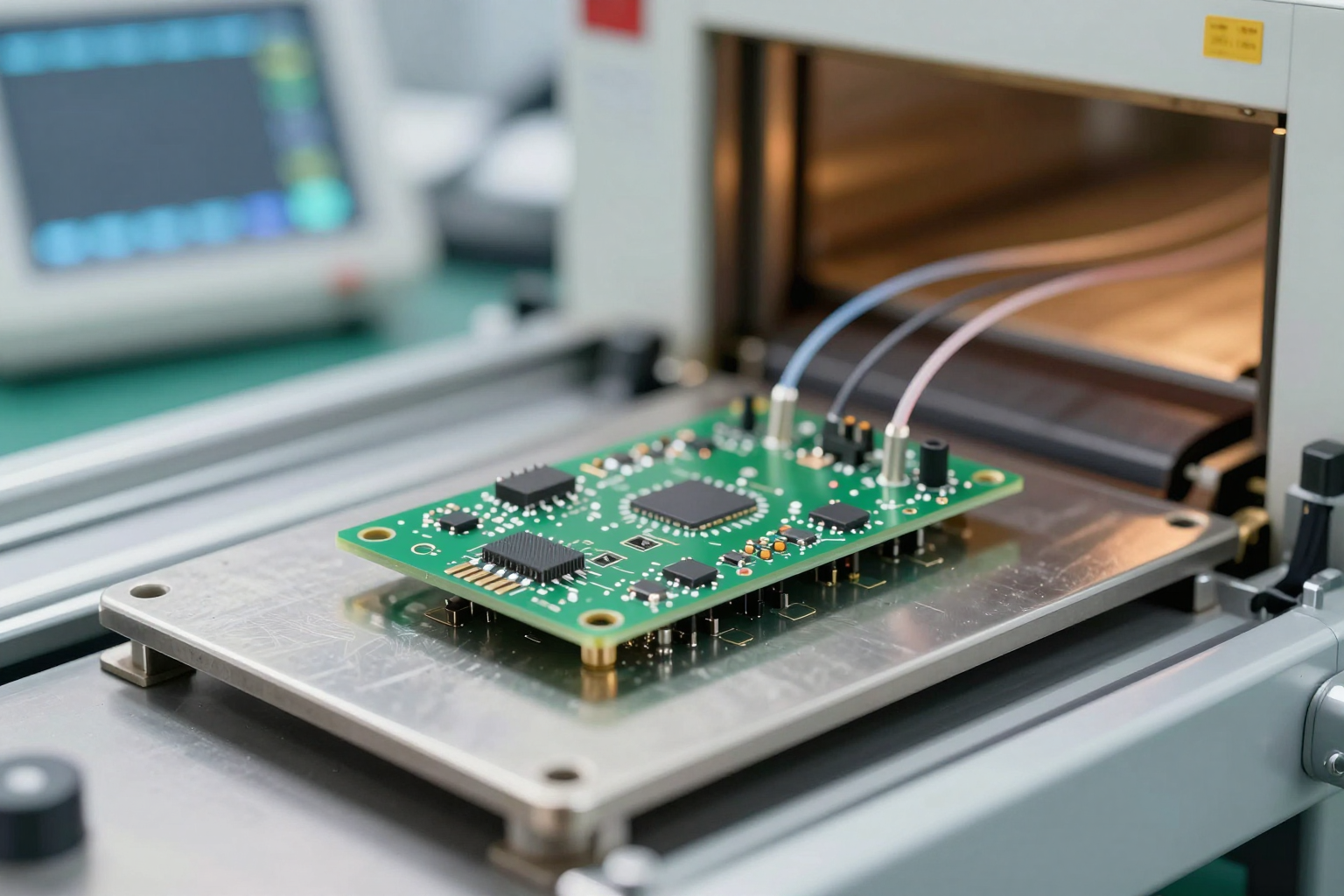
A good reflow soldering profile is not just an oven recipe. It is a process-control decision that affects solder wetting, void behavior, thermal stress, component survival, and lot-to-lot consistency.
That is why profile-development work should be treated as an engineering review, not as a last-minute machine setting. A weak profile can leave joints under-heated, overheat sensitive parts, increase cosmetic or electrical defects, and create unstable results between NPI and volume production.
For OEM teams, the practical question is simple: does the supplier have a disciplined way to build, verify, and hold a reflow soldering profile for your actual board, paste, component mix, and thermal mass? If the answer is vague, quality risk usually appears later as rework, troubleshooting, or slow ramp-up.
This guide explains what reflow soldering profile optimization really means, what variables matter most, where common mistakes happen, and how to review process discipline with a PCBA partner before launch.
What Reflow Soldering Profile Optimization Really Means
Reflow soldering profile optimization means shaping the heating and cooling cycle so solder joints form reliably without putting unnecessary stress on the assembly. In broader reflow soldering terms, that includes how the board moves through ramp, soak, peak, and cool-down behavior. In production, though, the real goal is not to hit a textbook curve. The goal is to match the curve to the actual assembly.
A practical process window should help the line achieve three things at the same time:
- enough energy for full wetting and proper joint formation
- enough control to avoid overheating parts, laminate, or finish
- enough repeatability to support inspection, test, and stable lot release
That is why profile optimization is usually linked to stencil control, placement accuracy, solder paste behavior, and downstream inspection. If a board is heading into PCB assembly services, the profile should be reviewed as part of the total SMT process window rather than as an isolated oven setting.
What Variables Change a Reflow Soldering Profile
No single oven profile fits every board. The required heat flow changes with the assembly itself.
The most important variables usually include:
- board size, thickness, copper balance, and local thermal mass
- package mix, especially large BGAs, QFNs, connectors, shields, or heat sinks
- solder paste chemistry and the supplier's recommended process window
- surface finish, pad design, and stencil deposit consistency
- pallet, carrier, or fixture effects when they are used in production
- whether the process target is NPI learning, pilot build stability, or volume repeatability
A dense mixed-technology assembly may need a different thermal profile from a lighter consumer board even if both use lead-free paste. The same is true when thermally heavy power parts sit next to small passives. If profiling ignores that mismatch, the cold joints and overheated parts may appear on the same board.
OEM teams should also remember that the profile is only as good as the data used to verify it. Thermocouple placement, measurement method, and revision control all matter. If the supplier cannot explain how the profile was validated on the real assembly, the reported process confidence is weak.
How to Balance Wetting, Void Risk, and Component Safety
A strong reflow soldering profile is a balancing exercise. More heat is not automatically better, and lower peak temperature is not automatically safer. The process has to give solder enough opportunity to reflow while still respecting component limits and board-level stress.
In practice, teams usually review the thermal window against a few concrete questions:
- Are low-mass parts heating too quickly compared with heavy components?
- Is the soak behavior helping temperature uniformity or just extending thermal exposure?
- Is peak energy high enough for wetting without pushing sensitive packages too hard?
- Is the cool-down behavior stable enough to avoid unnecessary stress or appearance issues?
When voiding, head-in-pillow risk, tombstoning, or incomplete wetting appears, the answer is rarely “change only one number.” The better path is to review the full interaction between paste, aperture design, component layout, thermal mass, and the profile window being used.
Later quality checks through quality testing support only work well when the upstream process is already controlled. Inspection can reveal escapes, but it cannot turn an unstable thermal profile into a robust one.
Common Reflow Soldering Profile Mistakes in NPI and Production
One common mistake is copying a previous profile from a similar job and assuming it is close enough. Similar boards often behave differently once copper distribution, package mass, or fixture use changes.
Another mistake is treating profiler data as a one-time NPI document instead of an actively controlled production reference. If oven loading, conveyor speed, paste lot, or board revision changes materially, the profile may need review again.
Teams also lose time when they discuss defects only at the symptom level. A bridged lead, dull joint, or void issue may involve stencil, paste storage, placement, and the oven profile together. Fixing the oven alone can mask the deeper cause.
A final mistake is letting supplier communication stay generic. If the manufacturer says the board will run on a “standard lead-free profile,” that is not enough detail for a higher-risk product. A credible process-profile discussion should be specific about validation method, control plan, and change management.
How OEM Teams Should Review Reflow Soldering Profile Control with a PCBA Supplier
Before quoting or transfer, OEM teams should ask how the supplier develops, approves, and holds a reflow soldering profile for the job. The answer should connect engineering intent to actual line practice.
Useful review points include:
- how the initial profile is built and verified on the target assembly
- how thermocouple locations are chosen and recorded
- how oven changes or material changes trigger review
- how profile evidence is tied to inspection, defect analysis, and corrective action
- how NPI learning is converted into controlled volume-release settings
If the board includes thermally sensitive parts, bottom-terminated packages, or dense mixed-mass regions, it is worth raising those risks early through the contact page instead of waiting for defect analysis after first build. Process expectations also need to stay aligned with broader workmanship and acceptability frameworks such as IPC-A-610, but the factory still has to translate those expectations into a board-specific process window.
FAQ About Reflow Soldering Profile Optimization
How often should a reflow soldering profile be reviewed?
A reflow soldering profile should be reviewed whenever the assembly changes in a way that can affect thermal behavior, or when process evidence shows the current window is no longer stable enough for the required quality level.
Can AOI replace careful reflow soldering profile work?
No. AOI helps detect visible issues after soldering, but it does not replace careful profile development. A stable process should reduce escapes before they reach inspection.
Conclusion
Good reflow soldering profile optimization is really about disciplined process control. When SMT teams validate the profile on the real assembly, connect it to defect learning, and review it with the supplier before ramp-up, they reduce avoidable quality noise and make quoting, NPI, and production transfer more predictable.